
Navy’s Story
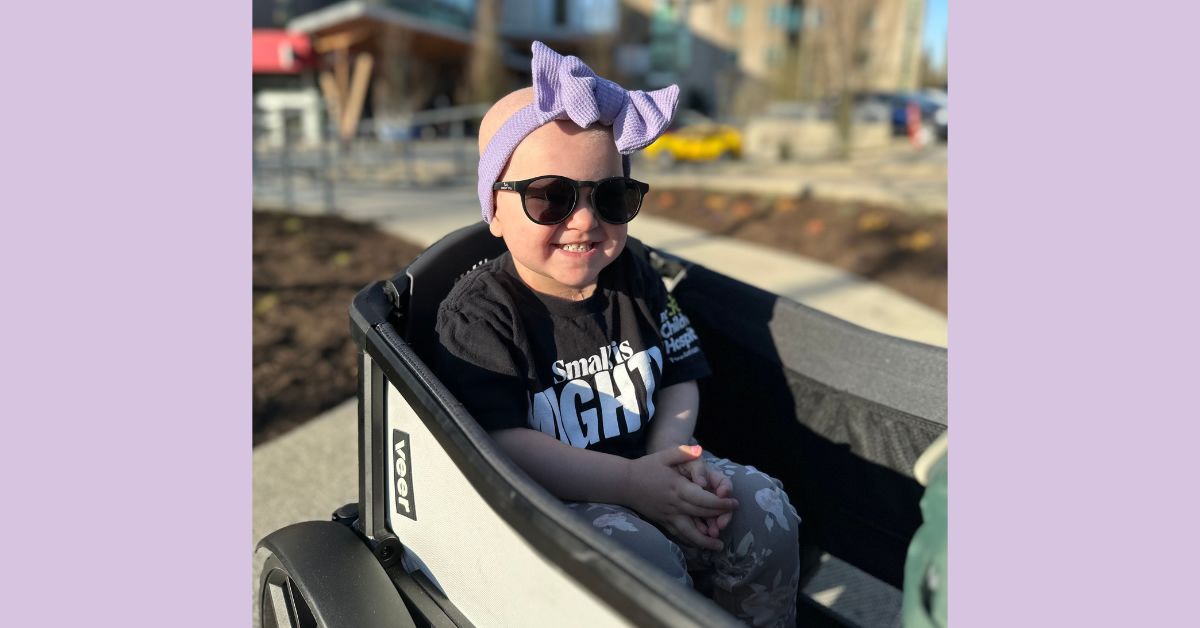
Before Navy’s diagnosis, life for Charlene, Mike, and their two young daughters, Hallie and Navy, looked much like life for any other young, happy family. They had a wonderful, busy life in Langley, where their girls were in swimming lessons, gymnastics, and preschool. Navy had just turned two, when in July of 2023, she became very unwell. At first, there were no clear answers, but when doctors discovered a large mass on Navy’s liver, things became frightening quickly.
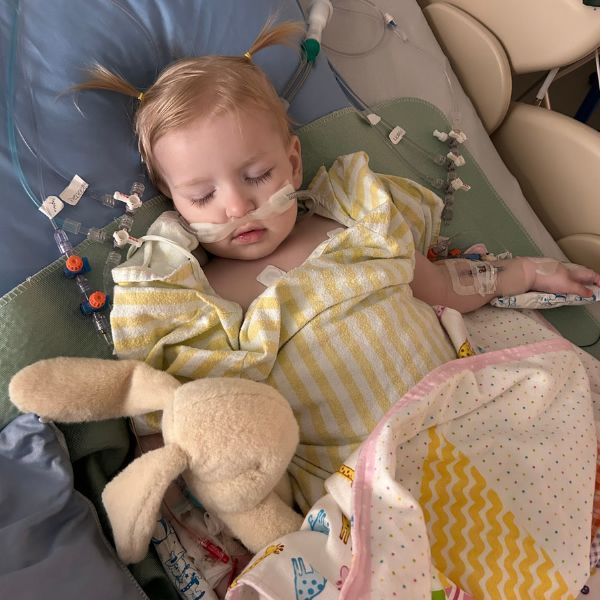
Immediately, the family was transferred to BC Children's Hospital and Navy was admitted to the Pediatric Intensive Care Unit. It took a week to reach a diagnosis: chronic granulomatous disease (CGD), a rare genetic immune disorder. The doctors explained how their life was about to change, Navy would be immunocompromised, and the only cure was a bone marrow transplant. The whole thing felt surreal, “It’s never you until it’s you,” Charlene reflects.
Navigating a Bone Marrow Transplant
Diagnosis marked the beginning of a long and uncertain journey for Navy and her family. She spent her first eight weeks in hospital before she was well enough to return home. But there was still a long road ahead. Her body needed another six months to recover and grow strong enough for the next stage of treatment: a bone marrow transplant (BMT). A BMT replaces diseased or damaged bone marrow with healthy stem cells, giving Navy's body the opportunity to rebuild her immune system.
Her older sister, Hallie, turned out to be an exact match for Navy’s transplant, and in February 2024, she became a donor for her little sister. While the transplant offered hope for a fresh start, getting there was an overwhelming experience for the whole family. Navy needed intense chemotherapy and medications to prepare her body, leaving her immune system extremely vulnerable. “How we explain it to friends, is they had to empty her body out to be able to put Hallie’s healthy immune system in and give it space to grow,” Charlene shares.
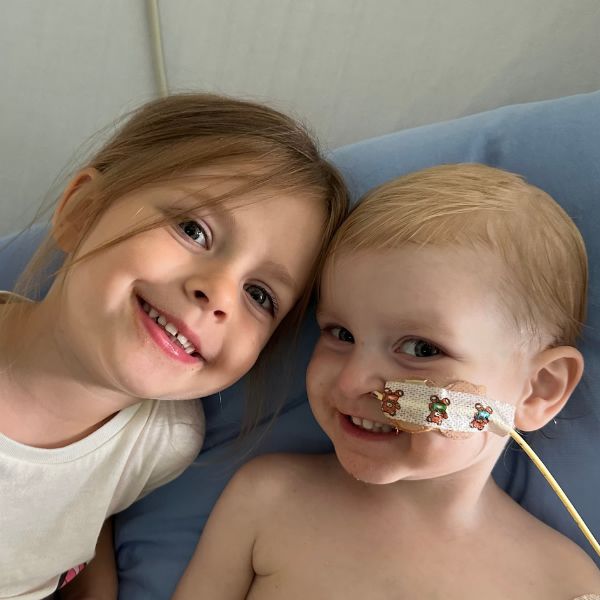
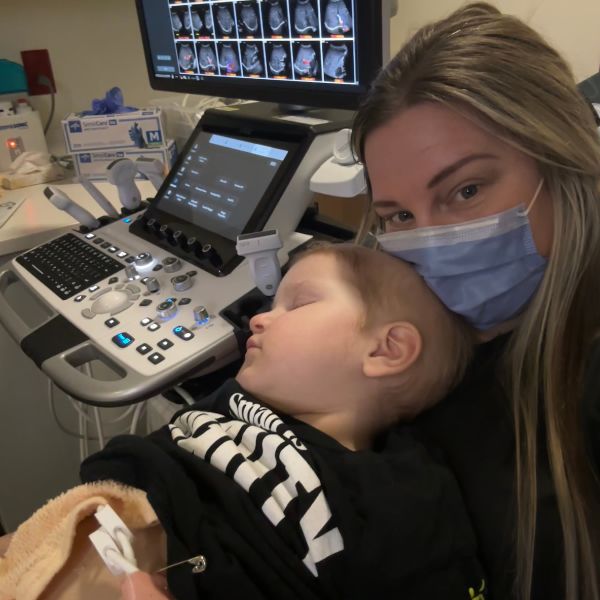
After her BMT, Navy spent eight weeks in hospital in an isolation room. Charlene and Mike took turns staying with her and staying at home with Hallie, balancing the needs of both daughters through an extraordinary period. “You’re catapulted into this new life, and you just have to figure it out,” Charlene recalls of that time.
Even the smallest milestones took on new meaning. During Navy’s final week of isolation, she was allowed to leave her room and walk around the hospital hallway, although she still couldn't leave the floor. “It’s so wild because imagine a hospital hallway feeling like freedom, but that becomes your reality. Being able to leave your room is considered huge progress.”
Finding a place in the support community
As a family navigating a rare disease and blood disorder, Charlene and Mike didn't always know where they fit. Much of the support on the eighth floor at BC Children’s was geared toward oncology families, leaving them unsure which resources were available to them. “That’s the thing, we don’t really fit in a lot of places. Being a rare disease and blood disorder diagnosis feels like we touch so many different areas, but don’t sit firmly in any.”
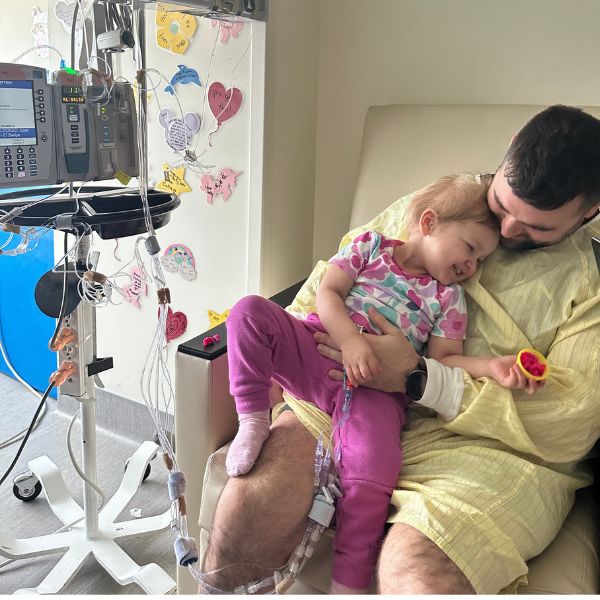
When Charlene first noticed the freezer labelled West Coast Kids Cancer Foundation in the family lounge, she assumed it wasn't for them. Already navigating the emotional, financial, and practical demands of having a child in hospital, she knew other families in the unit were experiencing the same challenges, and didn’t want to use any resources intended for them. It was another mom who let Charlene know that WCK supports blood disorder families, too, and that the freezer full of meals was there for them. Before long, it became an important source of support. “And so, as I got more brave and found my footing in there, it was a literal life-saver to have that freezer in there, and knowing that we could go grab something.”
A little comfort, always within reach
After her transplant, Navy was in an isolation room on T8 in BC Children’s, and her family had to follow strict precautions to protect her vulnerable immune system. Inside their room, everyday needs took on a different meaning. Parents were caring for their child, coordinating with nurses, managing medications, and trying to help their daughter through frightening and uncomfortable experiences. It was easy to reach the end of the day and realize they hadn't eaten. Having ready-to-heat meals available in the hospital meant they were looked after too. “It was such a weight lifted knowing that if she wasn’t asleep and I was starving and I couldn’t get out of the room to grab a food delivery or snack, that I had something quick and easy that I could eat. You knew it was always there, it’s just that consistent, default thing. That was very, very important.”
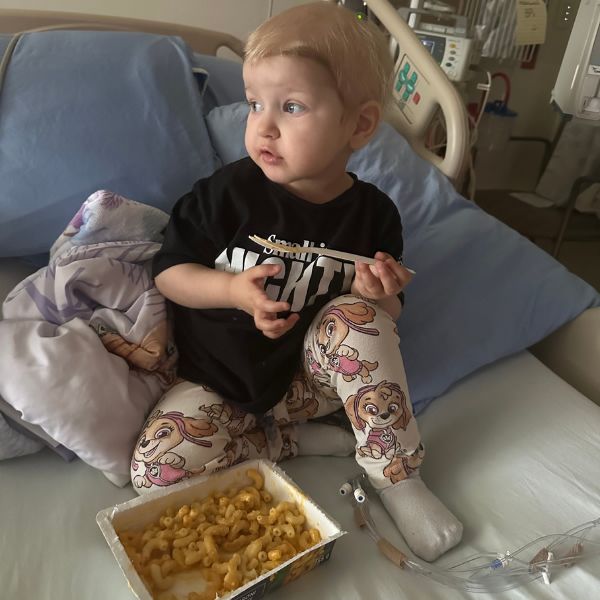
For Navy, one meal in particular became a favourite: WCK's macaroni and cheese, which she called “ronies.” Charlene laughs remembering how much Navy loved her ronies. The nurses would take a box of macaroni and cheese, sanitize it according to the precautions required for Navy's isolation, and pass it through the double doors into her room. From there, they could heat it up with the microwave in their room. Charlene remembers surviving on the leftovers, too, along with WCK's butter chicken and wraps.
Ronies created memories that the family still laughs about. As they prepared for Navy's discharge, Charlene had the nurses and hospital staff write messages for Navy in a Dr. Seuss book, like a graduation book. One note revealed a surprise: Mike had been going on 4 a.m. “ronie adventures” for Navy when she woke up hungry in the night. Charlene, who had been trying to maintain Navy’s strict sleep schedule on her nights with her, had laughed as she read about the middle-of-the-night ronie outings.
Another funny memory involves Hallie, who came to visit her sister with fruit snacks in hand. When Charlene asked where she had got them, Hallie replied that they were from “the free room” - meaning the family lounge where WCK keeps snacks and meals stocked for families to grab. These are the kinds of moments that can mean so much during a hospital stay: a comforting meal, a small treat, or a reason to giggle together.
The impact of something tangible
Charlene describes herself as an independent person who rarely asks for help. Before Navy's diagnosis, she never imagined that a freezer full of ready-to-heat meals would become such an important part of her family's experience. But time in hospital changed her perspective on what meaningful support can look like.
“It’s hard to even explain it unless someone is in that situation - but you are constantly taking care of your child, and updating nurses and getting medication, and rationalizing with your kid to take the medications, and making decisions and doing therapy and all the things - and then you realize, you haven’t eaten all day and you’re starving,” she shares. Having food close by meant Charlene and Mike had one less thing to think about, allowing them to focus on their daughters. It also meant Navy could look forward to a favourite meal on an otherwise difficult day.
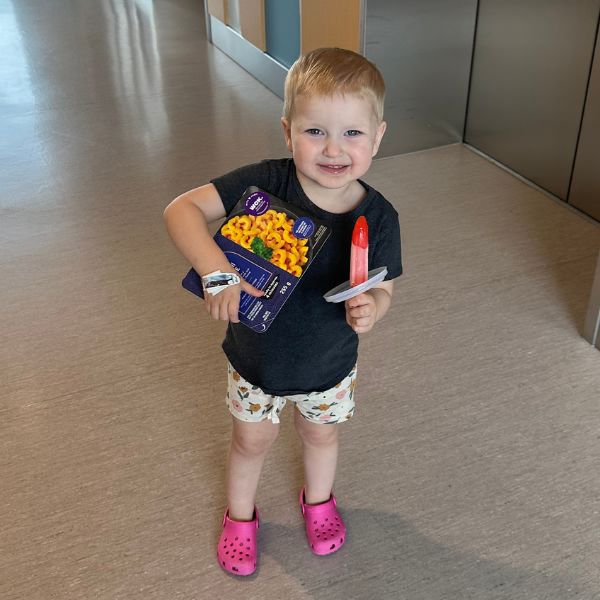
For Charlene, the importance of these everyday moments of support are exactly what she hopes donors will understand. “You don’t need to have $10,000 or even $1,000 - if you donate enough for one kid to have a meal that they are really excited about and makes their hard day a little better, then that’s an incredible thing you can do that doesn’t cost a lot.”
Having experienced the impact firsthand, Charlene wants donors to understand just how meaningful practical support can be for families navigating treatment. “WCK is one of the most tangible ways that I’ve seen to impact families - having been on that side of it. There is a ton of funding that goes into research and treatments which is obviously so important and needed - but something tangible for families like a dinner or a lunch is life-changing on some days. I want donors to understand that, it may not seem like the biggest thing, but the impact of filling that freezer is huge.”
Moving forward together
Today, Navy has been cleared to return to all the activities she loves, including cheer and riding her bike (which she is obsessed with!) Her recovery continues to be monitored, and there are long-term effects of treatment the family will have to navigate together. But currently, 80% of her cells are Hallie’s, meaning much of Navy's immune system is functioning well. Charlene describes her as resilient and brave, and says she is open about talking through the difficult things she has experienced.
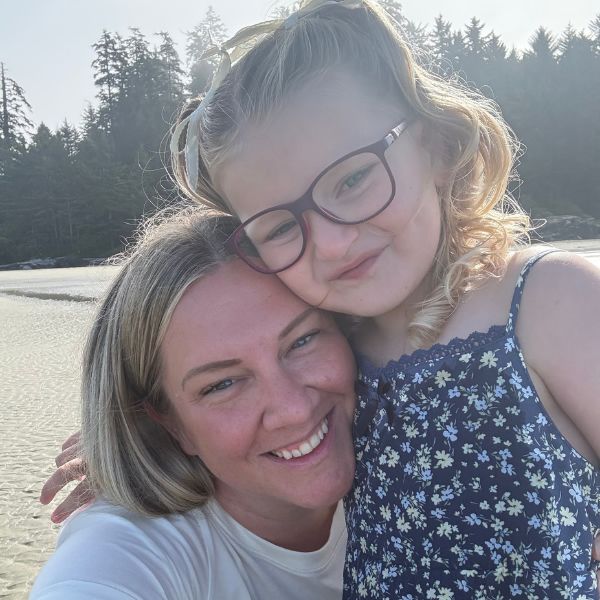
For their family, this experience has brought them even closer and deepened their appreciation for everyday moments. Charlene reflects on how returning to daily life also means carrying the memories and lessons of what they've been through. But she says having gone through something so difficult has earned them a perspective of gratitude - and being in the pediatric oncology, blood disorder, and rare disease community, they know how lucky they are that their daughters have had a positive health outcome.
When a child is going through treatment, meeting practical needs can help make room for what matters most: caring for your child, being together, and finding moments of comfort along the way. You can help us bring practical support right to families - in the hospital and at home. Your generosity helps make meals, snacks, and other essential supports available when families need them most.